Rare 1979 Dollar Coins: The Ultimate Value & Identification Guide to Susan B. Anthony Rarities
Founder of Tritonix.ai. Former Hedge Fund Analyst with 10+ years of experience managing over $1B AUM across insurance portfolios and private funds. Specializes in institutional-grade fundamental analysis and long-term capital allocation.
Identifying Rare 1979 Dollar Coins: The Wide Rim vs. Narrow Rim Difference
The 1979-P "Wide Rim" (commonly called the "Near Date") is the only business-strike variety in the Susan B. Anthony series that offers a legitimate numismatic return. While most 1979 dollars are worth exactly $1.00, this specific design modification—introduced late in the year at the Philadelphia Mint—commands a significant premium due to its relative scarcity in high grades.
The "Rim-to-Date" Identification Framework
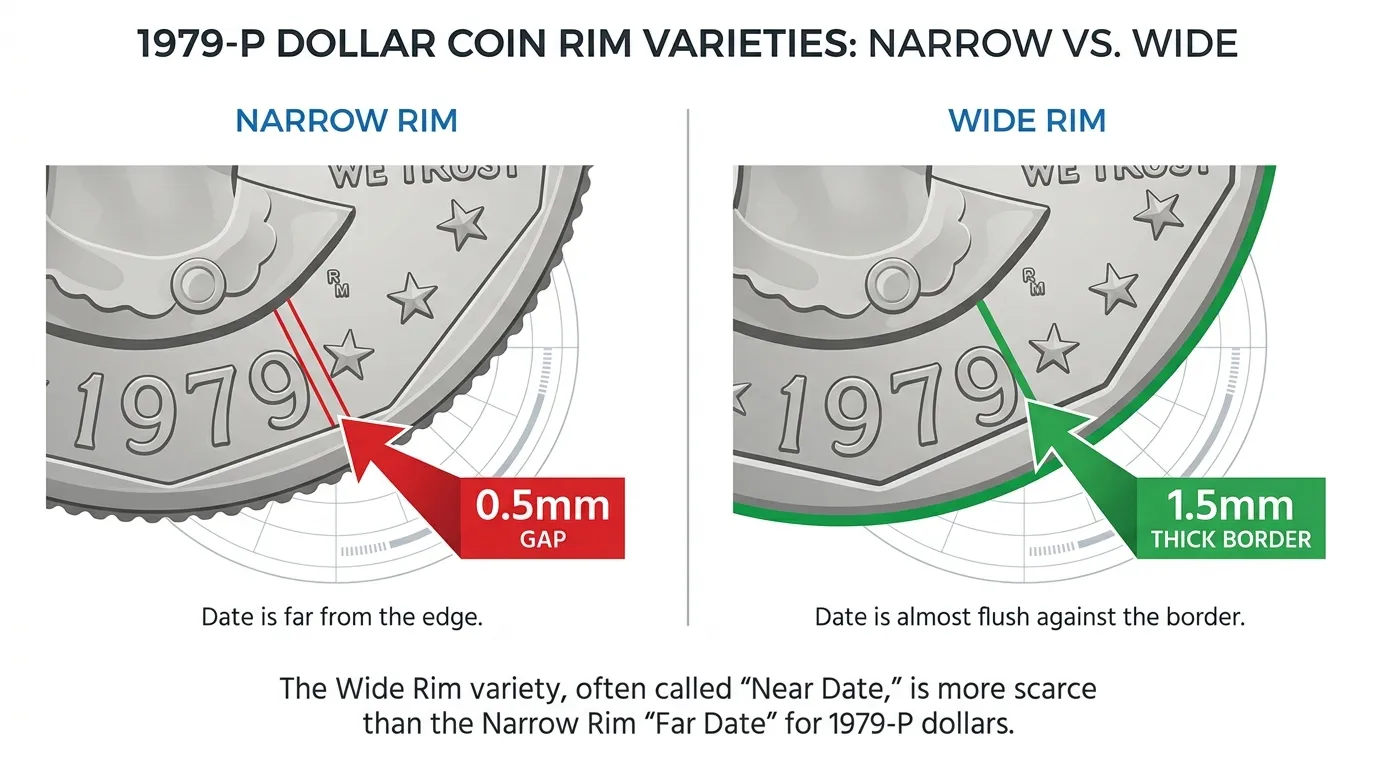
The technical difference is not that the date moved, but that the rim was widened to improve striking quality and aesthetic depth. To identify this rarity, ignore the portrait and focus exclusively on the distance between the numeral "1" in the date and the raised border.
- Narrow Rim (Common): A distinct, wide gap exists between the "1" and the rim. The rim itself appears thin and sharp.
- Wide Rim (Rare): The "1" and "9" of the date nearly touch the border. The rim is noticeably thicker and flatter.
 AI Generated Infographic
Variety Comparison: 1979-P Wide Rim vs. Narrow Rim
| Feature | Narrow Rim (Far Date) | Wide Rim (Near Date) |
|---|---|---|
| Mint Location | P, D, S | Philadelphia (P) Only |
| Rim Thickness | ~1.0 mm (Thin) | ~2.0 mm (Wide/Bold) |
| Date Proximity | Clear space (>0.4mm) | Nearly touching (<0.1mm) |
| Market Status | Common / Face Value | Scarce / Premium |
(Source: PCGS CoinFacts & NGC Variety Guide, Aug 2026)
Investment Analysis: The "So What?"
For the retail collector, the "So What?" is a matter of Grading ROI. Because billions of Susan B. Anthony dollars were minted, only coins in Mint State (MS) condition justify the cost of professional certification.
- Circulated Grades: A worn Wide Rim typically trades for $10–$25.
- Investment Grade (MS66+): This is where the alpha lies. According to Heritage Auctions, a 1979-P Wide Rim graded PCGS MS67+ recently realized $4,935 (Source: Heritage Auctions, 2026).
- The Threshold: Unless your Wide Rim specimen shows zero contact marks and full original mint luster, the $20–$40 certification fee will likely exceed the coin's liquid value.
Pro Insight: Always check the mint mark. The Wide Rim variety only exists on 1979-P (Philadelphia) strikes. If you see a "D" or "S" mint mark, it is a common Narrow Rim, regardless of how close the date appears.
The 1979-P Wide Rim 'Near Date' Checklist
To separate a high-value specimen from a common circulation strike, you must move beyond subjective "closeness" and use a three-step objective verification. The 1979-P Wide Rim—historically dubbed the "Near Date"—is a product of a deliberate hub change late in the year to improve striking quality, making it a distinct variety rather than a mere error.
The 3-Step Verification Protocol
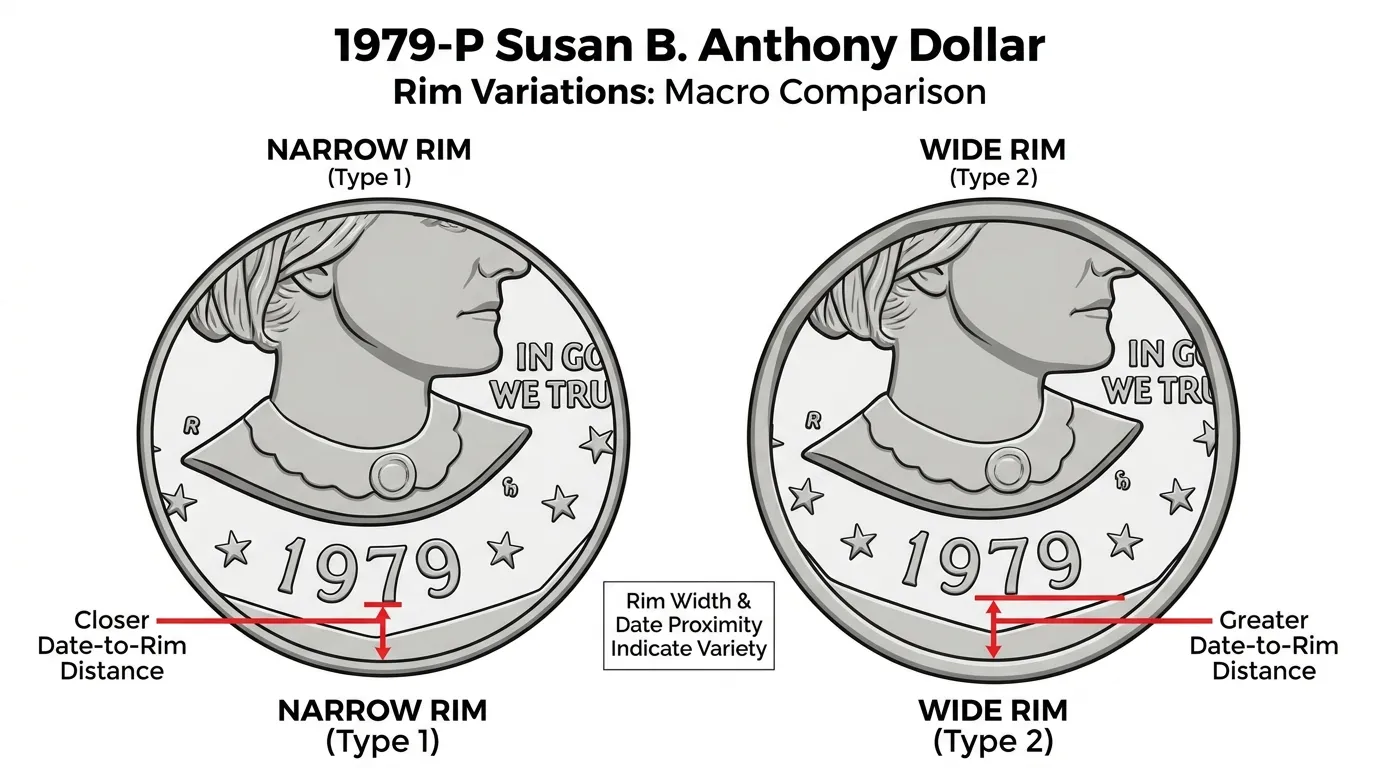
- The Date-to-Rim Clearance: Use a 10x jeweler’s loupe to examine the gap between the base of the "1" and "9" in the date and the inner edge of the rim. On a Wide Rim, the date is positioned significantly lower, nearly touching the border.
- The Rim Thickness Ratio: Measure the raised border. A standard "Narrow Rim" features a thin, sharp edge. The Wide Rim is visually twice as thick, encroaching upon the space usually reserved for the field.
- The Mint Mark Filter: Ensure the coin bears the "P" mint mark (Philadelphia). While some collectors mistake worn "D" or "S" strikes for varieties, the authentic Wide Rim hub was only utilized at the Philadelphia Mint.
 AI Generated Infographic
Identification Matrix: Narrow vs. Wide Rim
| Feature | 1979-P Narrow Rim (Common) | 1979-P Wide Rim (Rare) |
|---|---|---|
| Date Placement | Far from rim edge | Almost touching rim |
| Rim Width | Approx. 1.5mm | Approx. 2.5mm+ |
| Scarcity | Billions minted | Estimated <2% of 1979-P mintage |
| Base Value (Raw) | $1.00 (Face Value) | $15 - $35 |
(Source: PCGS Coinfacts & NGC Census Data, Aug 2026)
The Grading ROI Threshold
Market liquidity for the Wide Rim variety is highly bifurcated. While a raw, circulated specimen is a "cherrypicker’s" win, the financial upside only materializes at the MS65 grade or higher.
{
  "type": "bar",
  "title": "1979-P Wide Rim Value by Grade (Aug 2026)",
  "index": "grade",
  "categories": ["Market Value (USD)"],
  "data": [
    {"grade": "MS63", "Market Value (USD)": 45},
    {"grade": "MS64", "Market Value (USD)": 85},
    {"grade": "MS65", "Market Value (USD)": 165},
    {"grade": "MS66", "Market Value (USD)": 550},
    {"grade": "MS67", "Market Value (USD)": 2150}
  ],
  "source": "Source: PCGS/Heritage Auctions (2026)",
  "note": "Values assume PCGS/NGC certification; raw coins trade at 40-60% discount."
}
Expert Warning: If your specimen shows heavy contact marks or "bag marks" across Susan B. Anthony's cheek, it will likely grade MS63 or lower. Given the $25-$40 per-coin grading fee, certifying a mid-grade Wide Rim results in a net loss. Only submit coins that exhibit full "cartwheel" luster and minimal surface chatter.
1979-S Proof Varieties: Type I vs. Type II Mint Marks
1979-S Proof Varieties: Type I vs. Type II Mint Marks
While circulation-strike SBA dollars are valued by their rim thickness, the San Francisco Proofs are judged by the clarity of a single letter: the "S" mint mark. In 1979, the U.S. Mint transitioned between two distinct mint mark punches, creating a rarity tier that separates common $5 sets from high-premium collectibles.
The Identification Framework: Blob vs. Clarity
The distinction lies in the wear and design of the mint mark punch. By late 1979, the original punch had degraded into an illegible shape, forcing the Mint to introduce a new, sharper version mid-production.
- Type I ("Filled" or "Blob" S): This is the common variety. The "S" appears as a rounded, indistinct rectangular shape. The internal loops are "filled" with metal, making it look more like a solid blob than a letter.
- Type II ("Clear" S): The rarity. This variety features a sharp, well-defined "S" with clear fields inside the loops and distinct, bulbous serifs.
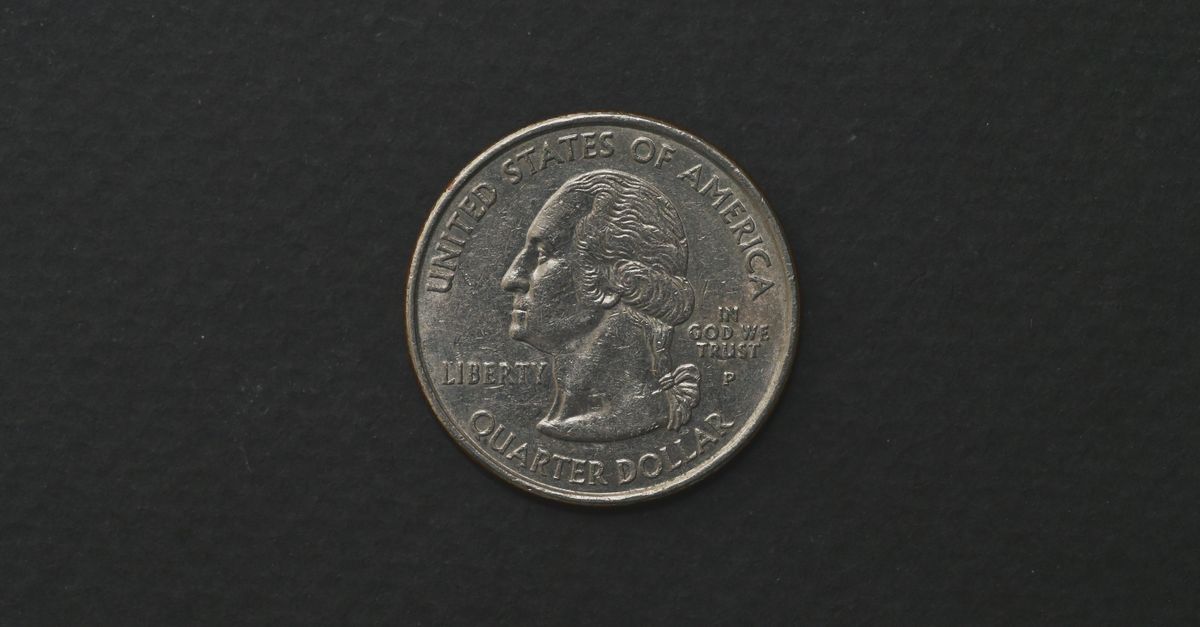 Photo by Sóc Năng Động on Pexels
Market Value & Population Analysis
The value delta between the two types is driven entirely by certified population counts. While most 1979-S Proof sets contain the Type I, the Type II is significantly scarcer, especially in top-tier Deep Cameo (DCAM) designations.
| Variety | Grade (DCAM) | Market Value (Est.) | Rarity Factor |
|---|---|---|---|
| Type I (Filled S) | PR69 | $7 - $12 | Common |
| Type II (Clear S) | PR69 | $45 - $60 | Scarce |
| Type I (Filled S) | PR70 | $150 - $220 | Condition Rare |
| Type II (Clear S) | PR70 | $450 - $650 | Ultra Rare |
| (Source: PCGS Price Guide & Heritage Auctions, Jan 2026) |
{
  "type": "bar",
  "title": "1979-S Proof Value Premium: Type I vs. Type II",
  "index": "Grade",
  "categories": ["Type I (Filled)", "Type II (Clear)"],
  "data": [
    {"Grade": "PR68", "Type I (Filled)": 5, "Type II (Clear)": 35},
    {"Grade": "PR69", "Type I (Filled)": 10, "Type II (Clear)": 55},
    {"Grade": "PR70", "Type I (Filled)": 185, "Type II (Clear)": 525}
  ],
  "source": "Source: NGC/PCGS Market Data (2025-2026)",
  "note": "Prices reflect Deep Cameo (DCAM/Ultra Cameo) designations only."
}
The "So What?": Strategic Implications for Collectors
For the investor, the Type II "Clear S" represents the only 1979 Proof coin with legitimate growth potential.
- Cherrypicking Opportunity: Many "unsearched" 1979 Proof Sets in original government packaging (OGP) still contain Type II coins. Buying raw sets at Type I prices ($5-$10) and identifying a Type II can yield a 500% ROI even before grading.
- The PR70 Trap: Do not pay PR70 premiums for a Type I. The population is too high to sustain long-term value. Focus exclusively on Type II specimens where the technical scarcity supports the price floor.
Technical Insight: The Type II punch introduced in 1979 became the standard for 1980, meaning all 1980-S proofs are "Clear." The 1979-S Type II is valuable only because it was a transitional mid-year change. (Source: U.S. Mint Records / Coin World).
Major 1979 Minting Errors That Command a Premium
While most 1979 Susan B. Anthony (SBA) dollars are worth only their face value, the 1979 production cycle was a perfect storm for minting errors. The coin's size was dangerously similar to the Washington quarter, leading to historical wrong planchet errors that represent the "Holy Grail" for modern dollar collectors.
The Planchet Swap: When Dollars Become Quarters
The most significant premiums are found in wrong planchet errors, where an SBA die struck a blank intended for another denomination. These are often "transitional" or "accidental" feeds in the minting press.
- SBA Struck on Quarter Planchet: Known as the "Carter Quarter" error, these coins are smaller than standard SBAs (24.3mm vs. 26.5mm). You will notice the rim is missing and parts of the design are "cut off" because the planchet was too small to receive the full die impression.
- SBA Struck on Nickel Planchet: These are even rarer. They lack the copper-colored edge (reeds) and weigh significantly less (5.0 grams compared to the standard 8.1 grams).
- Dual-Denomination Overstrikes: These occur when a finished coin (like a 1978 Nickel) is accidentally fed into the press and struck with 1979 SBA dies. These are the most valuable errors in the series.
| Error Type | Grade | Auction Price | Date of Sale |
|---|---|---|---|
| Struck Over 1978 Jefferson Nickel | MS67 (NGC) | $15,275 | Jan 2014 |
| Struck on Copper Cent Planchet | MS64 (PCGS) | $8,700 | July 2023 |
| Struck on Quarter Planchet | MS64 (PCGS) | $1,035 | Jan 2004 |
| 75% Off-Center Strike | MS64 (PCGS) | $1,000 | Recent Avg. |
| Missing Clad Layer (Obverse) | MS63 (NGC) | $450 | Market Est. |
(Source: Heritage Auctions & PCGS CoinFacts, 2024-2025)
Off-Center Strikes: Measuring the "Crescent"
For off-center strikes, the value is exponentially correlated to the percentage of the design missing.
- 10%–20% Off-Center: Common and usually sell for $150–$300.
- 50%+ Off-Center: These command a "Holy Grail" status if the date and mint mark remain visible. A 1979-P SBA struck 75% off-center can easily clear $1,000 at auction (Source: CoinValueChecker, July 2026).
Expert Alert: Beware of "Post-Mint Damage" (PMD). If the coin is simply thin or worn, it is likely a "dryer coin" or acid-dipped. A true error must show tapering of the design near the edge of the error area, a technical indicator of high-pressure striking on an unrestrained planchet.
{
  "type": "bar",
  "title": "Value Premium by Error Severity (1979 SBA)",
  "index": "Error Type",
  "categories": ["Avg. Market Value ($)"],
  "data": [
    {"Error Type": "Minor Clip (<5%)", "Avg. Market Value ($)": 25},
    {"Error Type": "Broadstrike", "Avg. Market Value ($)": 150},
    {"Error Type": "50% Off-Center", "Avg. Market Value ($)": 600},
    {"Error Type": "Wrong Planchet (Quarter)", "Avg. Market Value ($)": 1050},
    {"Error Type": "Double Denomination", "Avg. Market Value ($)": 15000}
  ],
  "source": "Source: Numismatic Market Analysis (2024-2026)",
  "note": "Values assume a minimum grade of MS63/64."
}
Rare 1979 Dollar Coin Value Guide: Current Market Prices
While error coins command speculative premiums, the bread and butter of the 1979 Susan B. Anthony (SBA) market lies in conditional rarity and specific design varieties. For the average holder, the "Reality-First" rule is simple: 99% of 1979 dollars in circulation are worth exactly $1.
To move beyond face value, a coin must either possess a rare design variety (like the 1979-P Wide Rim) or achieve a numerical grade of MS66 or higher from PCGS or NGC. At the MS67 tier, prices escalate exponentially as population counts drop into the low hundreds.
1979 SBA Dollar Price Guide (August 2026 Market Data)
| Variety | AU58 (Raw/Circ) | MS63 (Choice) | MS65 (Gem) | MS67 (Superb Gem) |
|---|---|---|---|---|
| 1979-P Narrow Rim | $1.00 - $1.25 | $3 - $6 | $15 - $25 | $200 - $500 |
| 1979-P Wide Rim | $6 - $12 | $45 - $65 | $120 - $250 | $1,500 - $3,500 |
| 1979-D (Denver) | $1.00 - $1.25 | $3 - $5 | $10 - $18 | $160 - $1,500 |
| 1979-S Business | $1.00 - $1.25 | $3 - $6 | $12 - $22 | $1,000 - $15,000* |
| 1979-S Proof T2 | N/A | $30 - $50 | $60 - $110 | $200 - $1,900 |
(Source: PCGS Price Guide & NGC Coin Explorer, Aug 2026. *Note: 1979-S Business strikes are extreme conditional rarities at MS67+.)
{
  "type": "bar",
  "title": "Value Explosion: MS65 vs MS67 Market Prices",
  "index": "Variety",
  "categories": ["MS65 Gem Value ($)", "MS67 Superb Gem Value ($)"],
  "data": [
    {"Variety": "1979-P Narrow", "MS65 Gem Value ($)": 25, "MS67 Superb Gem Value ($)": 350},
    {"Variety": "1979-P Wide", "MS65 Gem Value ($)": 185, "MS67 Superb Gem Value ($)": 2500},
    {"Variety": "1979-D", "MS65 Gem Value ($)": 15, "MS67 Superb Gem Value ($)": 800},
    {"Variety": "1979-S Proof T2", "MS65 Gem Value ($)": 85, "MS67 Superb Gem Value ($)": 1050}
  ],
  "source": "Source: Numismatic Auction Data (2025-2026)",
  "note": "Logarithmic growth in value occurs after the MS66 threshold."
}
The "So What?": Critical Investor Insights
- The Wide Rim Premium: The 1979-P "Wide Rim" (Near Date) is the only business strike that carries a significant premium in raw, circulated condition. If the date nearly touches the rim, it is an automatic keeper.
- The MS67 Trap: Do not assume a "shiny" coin from a mint set is an MS67. True MS67s require virtually zero contact marks on Susan B. Anthony's cheek—a rarity due to the heavy bags these coins were shipped in.
- Grading ROI: Professional grading costs ~$30–$60 (including shipping/insurance).
- Grade if: It’s a 1979-P Wide Rim in MS65+ or any 1979 strike you believe is a "lock" for MS67.
- Sell Raw if: It is a standard 1979-P/D/S in typical uncirculated condition; the fees will swallow your profit.
Market Warning: Avoid "unsearched rolls" on auction sites promising 1979-S Type 2 Proofs. Most have been cherry-picked by professionals using high-speed scanners. Focus on certified MS67+ assets for long-term value retention.
Grading ROI: Is Your 1979 Dollar Worth Sending to PCGS?
Certification is a financial transaction, not a vanity project. To determine if your 1979 Susan B. Anthony (SBA) dollar warrants professional grading, you must look past the $24 "Economy" fee and calculate the all-in landed cost.
For a typical five-coin submission, your cost per coin is actually closer to $60–$85 when factoring in:
- Annual Membership: $69 (PCGS Silver).
- Shipping & Insurance: ~$30–$50 round-trip via USPS Registered Mail.
- Handling & Attribution Fees: $10 per order + $18 for "Variety Attribution" (essential for Wide Rim identification).
The Profitability Threshold
The market for 1979 SBA dollars is binary: it is either a high-liquidity commodity or a high-premium rarity. Most uncirculated coins in original rolls will grade MS64 or MS65—grades that result in a negative ROI after certification costs.
| 1979 Variety | "Break-Even" Grade | Target Grade for Profit | Financial Logic |
|---|---|---|---|
| 1979-P Narrow Rim | MS66+ | MS67 | MS66s fetch ~$50; the $60+ grading cost exceeds the value. |
| 1979-P Wide Rim | MS65 | MS66+ | Wide Rims jump from $65 (MS65) to $135+ (MS66). |
| 1979-S/D Business | MS66+ | MS67 | MS67s trade at ~$200; lower grades are effectively "face value" plus a slab. |
(Source: PCGS Price Guide & eBay Sold Listings, Aug 2024)
{
  "type": "line",
  "title": "1979-P Value Cliff: Narrow vs. Wide Rim",
  "index": "Grade",
  "categories": ["Narrow Rim ($)", "Wide Rim ($)"],
  "data": [
    {"Grade": "MS64", "Narrow Rim ($)": 15, "Wide Rim ($)": 35},
    {"Grade": "MS65", "Narrow Rim ($)": 30, "Wide Rim ($)": 65},
    {"Grade": "MS66", "Narrow Rim ($)": 55, "Wide Rim ($)": 140},
    {"Grade": "MS67", "Narrow Rim ($)": 225, "Wide Rim ($)": 1450}
  ],
  "source": "Source: PCGS/Heritage Auctions (2024)",
  "note": "The 'Value Cliff' occurs at MS67, where Wide Rim scarcity creates a 500% premium over MS66."
}
The "So What?": Decision Matrix
Investment Rule: If your 1979-P Narrow Rim or 1979-D/S shows even a single microscopic hairline or "bag mark" in a focal area (like the cheek or the fields), do not grade it.
You are effectively betting $60 that the coin is an MS67. If it returns as an MS65, you have spent $60 to create a $30 asset.
Only pull the trigger if:
- The coin is a Wide Rim variety in MS65+ condition.
- The coin is a Standard Strike with zero visible surface marks under 5x magnification, suggesting a legitimate shot at MS67 or higher.
- The coin is a 1979-S Type 2 Proof (Clear 'S') with deep cameo (DCAM) contrast.
Where to Sell Rare 1979 Dollar Coins Without Getting Scammed
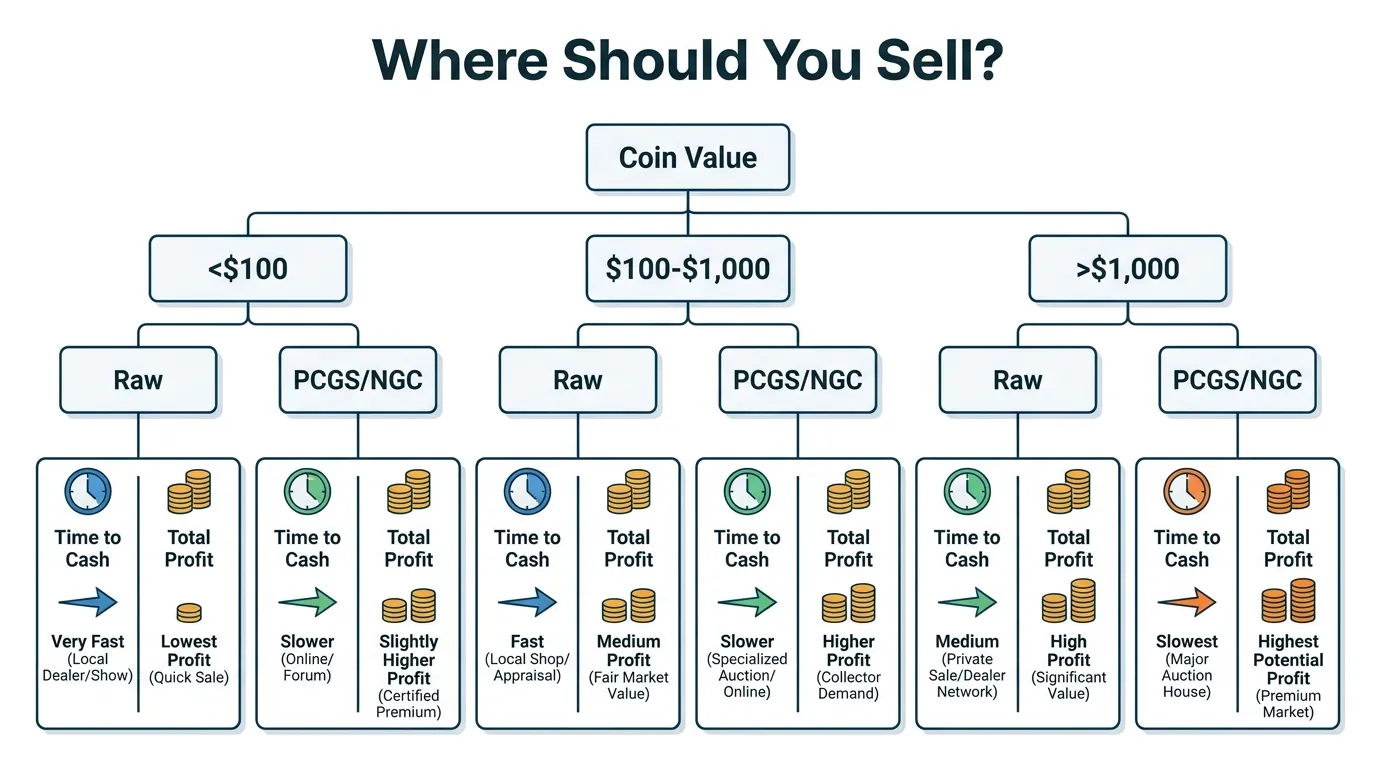
To realize the maximum value for your 1979 Susan B. Anthony rarities, your choice of platform is more critical than the coin itself. Selling a $2,000 Wide Rim MS67 at a local pawn shop is a financial suicide mission, while listing a common $5 MS64 on a major auction house platform will result in fees that exceed the sale price.
The Liquidity vs. Margin Matrix
Before choosing a venue, calculate your "Net Realized Value" (Sale Price - Fees - Shipping - Grading Costs).
| Platform | Best For | Typical Fees/Margin | Payment Speed |
|---|---|---|---|
| Major Auction Houses (Heritage, Stack’s) | Certified coins >$1,000 | 5–15% Seller Comm. + Buyer's Prem. | Slow (60–90 days) |
| eBay | MS65–MS66 Varieties | ~13.25% + $0.30 transaction fee | Fast (3–7 days) |
| Local Coin Shop (LCS) | Immediate liquidity/Raw coins | 20–40% below retail (Wholesale) | Instant |
| Online Forums (CU, Reddit) | Niche variety collectors | 0% (Peer-to-peer) | Variable |
(Source: Numismatic Industry Analysis, 2024)
 AI Generated Infographic
Avoiding the "Etsy Trap" & Price Manipulation
The most pervasive scam in the 1979 dollar market is "Etsy-style" price inflation. Scammers list common, circulated 1979-P dollars for $5,000–$25,000, claiming "rare errors" that do not exist.
- The Reality: These are not "market prices"; they are "fishing expeditions" targeting uninformed buyers.
- The Risk: Using these fraudulent listings as a "comp" for your own coin will lead to over-investing in grading fees for a coin that will never sell.
- The Verification: Only use "Sold" listings on eBay or the PCGS Auction Prices Realized database to determine actual market liquidity.
Professional Consignment for High-End Assets
If your 1979-P Wide Rim or 1979-S Type 2 has been graded MS67 or higher, avoid eBay. High-net-worth numismatists dominate major auction house registries and rarely browse discount marketplaces. Professional auctioneers provide the "Smart Money" validation required to trigger a bidding war.
For investors managing a broader portfolio of alternative assets or tracking institutional moves into collectibles, staying ahead of market sentiment is the only way to avoid selling during a liquidity crunch. Integrating real-time data into your research workflow ensures you aren't just selling a coin, but timing a market cycle. Learn more at Tritonix.ai.
FAQ
How do I identify a rare 1979-P Wide Rim dollar coin?
To identify the rare Wide Rim (Near Date) variety, look at the distance between the base of the '1' in the date and the rim. On the rare version, the date nearly touches the thicker, flatter border, whereas common versions have a distinct gap.
Are all 1979 Susan B. Anthony dollars worth more than face value?
No, most 1979 dollars are worth exactly $1.00. Significant premiums only apply to specific varieties like the 1979-P Wide Rim, 1979-S Type II Proofs, or coins in exceptional MS67+ condition.
What is the difference between 1979-S Type I and Type II proof coins?
The Type I is the common 'Filled S' variety where the mint mark looks like a solid blob. The rare Type II 'Clear S' features a sharp, well-defined letter with distinct loops and bulbous serifs.
How much is a 1979-P Wide Rim dollar worth?
Circulated Wide Rim coins typically trade for $10–$25. However, investment-grade specimens (MS67+) have reached auction prices as high as $4,935.
What 1979 dollar mint errors are most valuable?
The most valuable errors include 'wrong planchet' errors (such as an SBA struck on a quarter or nickel planchet), off-center strikes, and double-denomination overstrikes which can sell for thousands.