JFK Coins Worth: The Complete Value Guide (Silver Melt vs. Collector Rarities)
Founder of Tritonix.ai. Former Hedge Fund Analyst with 10+ years of experience managing over $1B AUM across insurance portfolios and private funds. Specializes in institutional-grade fundamental analysis and long-term capital allocation.
JFK Coins Worth: The 3-Tier Silver Content Hierarchy
The intrinsic value of the Kennedy Half Dollar is anchored by its "Silver Floor"—the guaranteed minimum worth based on its bullion content. For investors and "junk silver" stackers, the year of mintage is the single most important variable in determining JFK coins worth.
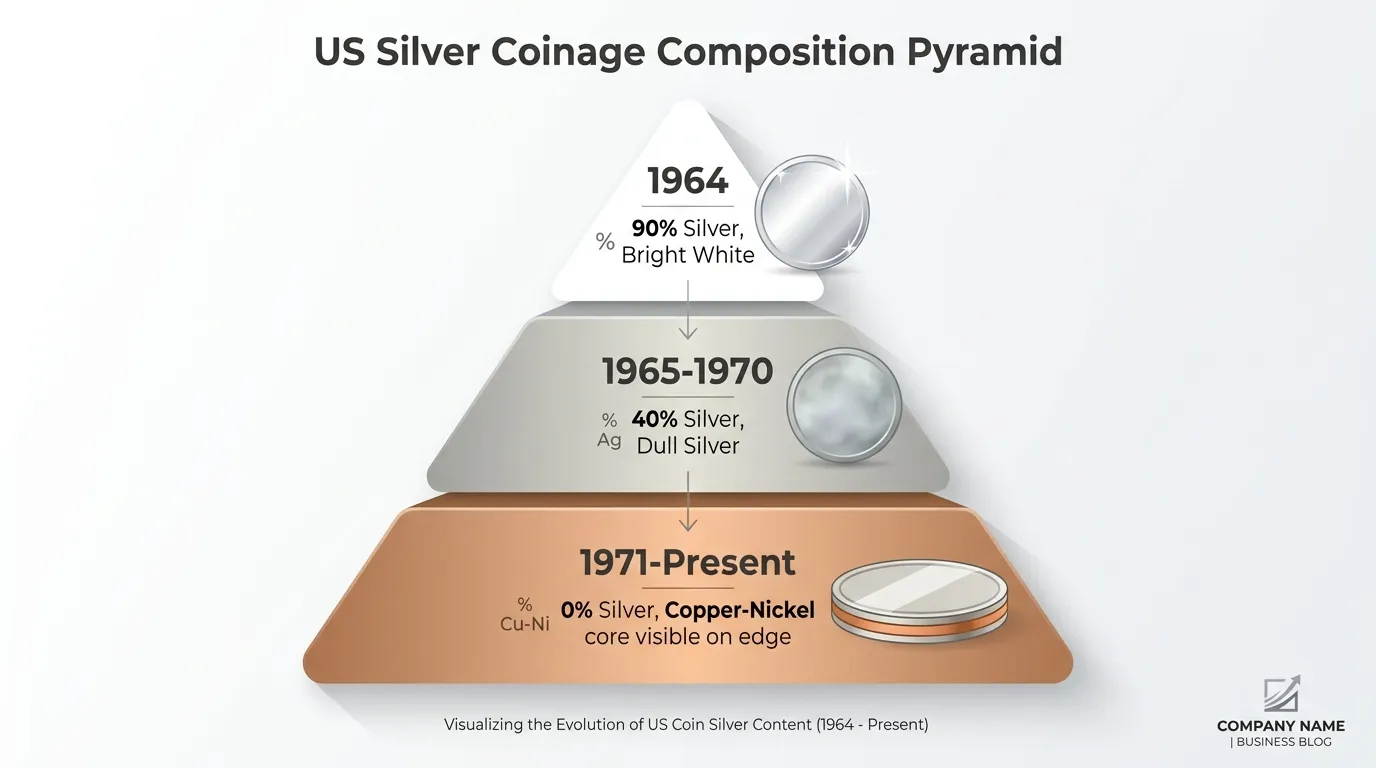 AI Generated Infographic
The 3-Tier Hierarchy of Intrinsic Value
Understanding the metal composition is the first step in a "Reality Check" valuation. The market treats these three eras as distinct asset classes:
| Mintage Years | Silver Content | Actual Silver Weight (ASW) | Current Melt Value (Est.) |
|---|---|---|---|
| 1964 | 90% Ag, 10% Cu | 0.3617 troy oz | $23.20 - $23.40 |
| 1965–1970 | 40% Ag Clad | 0.1479 troy oz | $9.45 - $9.60 |
| 1971–Present | 0% (Copper-Nickel) | 0.0000 troy oz | $0.50 (Face Value) |
(Source: NGC & SilverPrice.org, Sept 2026. Estimates based on $64.25/oz spot price.)
Tier 1: The 1964 "Bullion Standard"
The 1964 issue is the only circulation-strike Kennedy half dollar comprised of 90% fine silver. Because over 429 million were struck, they are rarely valued for rarity; instead, they trade as liquid bullion. At current spot prices, a single 1964 Kennedy is worth nearly 47x its face value.
Tier 2: The 1965–1970 "Silver Clad" Bridge
As silver prices rose, the U.S. Mint reduced the silver content to a 40% silver-clad composition (80% silver outer layers bonded to a 21% silver core). These years are often overlooked by novice hunters, but they still contain over 1/7th of an ounce of pure silver. They represent a high-value "pocket find" that remains significantly more valuable than the face-value coins that followed.
Tier 3: 1971 and Beyond (The Fiat Era)
From 1971 onward, the Mint transitioned to a copper-nickel clad composition. Unless the coin is a specialized Silver Proof (identified by an "S" mint mark and a solid silver edge) or a rare mint error, these coins are worth exactly 50 cents.
{
  "type": "bar",
  "title": "Silver Content by Era (Actual Silver Weight)",
  "index": "Era",
  "categories": ["Troy Ounces of Pure Silver"],
  "data": [
    {"Era": "1964 (90%)", "Troy Ounces of Pure Silver": 0.3617},
    {"Era": "1965-70 (40%)", "Troy Ounces of Pure Silver": 0.1479},
    {"Era": "1971+ (Clad)", "Troy Ounces of Pure Silver": 0}
  ],
  "source": "Source: U.S. Mint Specifications (2026)",
  "note": "ASW reflects the pure silver weight, excluding base metal alloys."
}
So What? For collectors, the "Silver Floor" means a 1964 Kennedy will never be worth less than its melt value (currently ~$23), regardless of its condition. Conversely, 1971+ coins must possess exceptional grading (MS67+) or rare errors to exceed their 50-cent face value.
Calculating Silver Melt Value for JFK Coins
To quantify the "Silver Floor" of your collection, you must bypass numismatic speculation and focus on intrinsic commodity value. For Kennedy Halves, this value is a moving target dictated by the global silver spot price and the coin's Actual Silver Weight (ASW).
The mathematical formula for determining a coin’s baseline worth is:
Melt Value = (Current Spot Price per Troy Ounce) × (ASW of the Coin)
The Kennedy Silver Weight Specifications
To calculate value accurately, you must first identify the composition era. The U.S. Mint transitioned from high-purity silver to base metal "clad" over a seven-year period, drastically altering the ASW per unit.
| Mintage Years | Silver Content | Total Weight (g) | Actual Silver Weight (ASW) |
|---|---|---|---|
| 1964 | 90% Silver | 12.50g | 0.36169 oz |
| 1965–1970 | 40% Silver | 11.50g | 0.14792 oz |
| 1971–Present | 0% (Clad)* | 11.34g | 0.00000 oz |
(Source: U.S. Mint / Professional Coin Grading Service, 2026. Note: Excludes modern Silver Proof sets.)
Live Calculation Case Study
As of September 17, 2026, the silver spot price has reached a milestone $64.00 per troy ounce (Source: KITCO, Sept 2026). Using this benchmark, the intrinsic value of a single Kennedy Half breaks down as follows:
- 1964 Kennedy (90%): $64.00 × 0.36169 = $23.15
- 1965–1970 Kennedy (40%): $64.00 × 0.14792 = $9.47
{
  "type": "line",
  "title": "Intrinsic Melt Value vs. Silver Spot Price",
  "index": "Spot Price ($)",
  "categories": ["1964 (90%) Value", "1965-1970 (40%) Value"],
  "data": [
    {"Spot Price ($)": 30, "1964 (90%) Value": 10.85, "1965-1970 (40%) Value": 4.44},
    {"Spot Price ($)": 45, "1964 (90%) Value": 16.28, "1965-1970 (40%) Value": 6.66},
    {"Spot Price ($)": 60, "1964 (90%) Value": 21.70, "1965-1970 (40%) Value": 8.88},
    {"Spot Price ($)": 75, "1964 (90%) Value": 27.13, "1965-1970 (40%) Value": 11.09}
  ],
  "source": "Source: Commodity Analysis (Sept 2026)",
  "note": "Values represent the raw metal content only, excluding dealer premiums."
}
Investor Insight: When silver prices are volatile, dealers often pay 10-15% below spot for "junk silver" (circulated coins) to account for refining costs and liquidity risks. If you are selling, your "realized" value will likely be slightly lower than the theoretical melt value.
For the modern collector, this calculation provides the ultimate risk management tool. Even if a 1964 Kennedy is worn flat, its metal content ensures it will never trade for its 50-cent face value, effectively decoupling it from the purchasing power of the U.S. Dollar.
High-Value Key Dates and Varieties That Boost JFK Coins Worth
While silver provides a high floor for JFK half dollars, the numismatic ceiling is driven by production anomalies and low-mintage "key dates." For the investor, moving from bullion to collectibles requires shifting focus from weight to technical diagnostics and mintage figures.
The 1964 "Accented Hair" Proof: The Jackie Kennedy Aesthetic
The most storied rarity in the series was born from tragedy. The initial 1964 proof design was modified after Jacqueline Kennedy requested less detail in the hair strands above the ear. However, approximately 1% to 3% of the 3.9 million 1964 proofs had already been struck with the original "Accented Hair" dies.
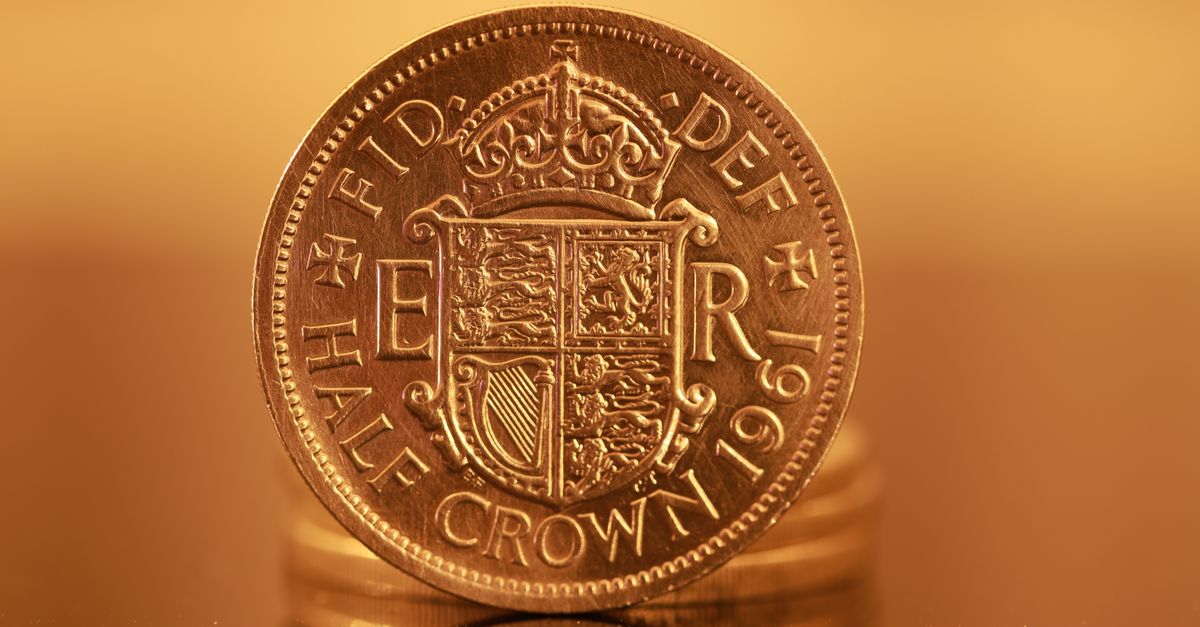 Photo by Nic Wood on Pexels
To identify this variety, look for heavily incised strands directly above the ear and a truncated lower-left serif on the "I" in LIBERTY. While a raw specimen might fetch $50–$100, ultra-high grades are exponential assets: a PCGS PR69DCAM specimen realized $46,800 in January 2024 (Source: Heritage Auctions).
The 1970-D: The Mint-Set Only Sleeper
By 1970, the U.S. Mint planned to eliminate silver from the half dollar entirely. Consequently, the 1970-D was never released for general circulation, issued only within the 2.1 million Uncirculated Mint Sets of that year.
This creates a "forced scarcity" profile. While "junk silver" enthusiasts ignore 1970-D coins because they are only 40% silver, collectors pay a premium for their low-mintage status. High-grade MS67 examples regularly trade for $3,000 to $6,000, with one record sale reaching $15,000 (Source: PCGS, 2024).
The 1998-S Silver Matte Finish: Modern Scarcity
The 1998-S Matte Finish is the lowest-mintage non-gold Kennedy half dollar. Struck as part of the Robert F. Kennedy commemorative set, only 62,000 units were produced. Unlike the mirror-like finish of standard proofs, these feature a satin, sand-blasted texture.
| Variety / Date | Composition | Key Diagnostic | Estimated Value (MS65/PR65) |
|---|---|---|---|
| 1964 Accented Hair | 90% Silver | Missing hair strand above ear | $120 - $200 |
| 1970-D | 40% Silver | No mint-set packaging required | $35 - $60 |
| 1998-S Matte | 90% Silver | Dull, satin finish (Not Mirror) | $130 - $180 |
(Source: PCGS & NGC Price Guides, Sept 2024)
So What? (The Investor’s Take)
If you find a 1964 or 1970 half dollar, do not clean it. Numismatic value is highly sensitive to surface preservation. For the reader, the "So What?" is simple: check your 1964 proofs for the hair detail and your 1970 sets for the "D" mint mark. These represent a 1,000% to 5,000% premium over the coin’s silver melt value.
The 'No FG' Error and Other Minting Anomalies
Beyond silver content, the highest premiums in the JFK series are often hidden in plain sight: die-polishing errors. The most significant is the "No FG" variety, where the initials of the engraver, Frank Gasparro, are missing from the reverse.
This anomaly occurred when mint employees over-polished the dies to remove "clash marks" (damage from dies hitting each other without a coin blank). In the process, the shallow "FG" initials located between the eagle's tail feathers and its right leg were accidentally ground away.
 Photo by https://kaboompics.com/ on Pexels
Identifying the 1972-D and 1982-P Rarities
While "No FG" examples exist for multiple years, the market focuses on the 1972-D and 1982-P due to their verified scarcity and collector demand.
- The 1972-D "No FG": This is the "Blue Chip" of JFK errors. A standard 1972-D is worth face value ($0.50) in circulated condition. A confirmed "No FG" specimen in AU-58 to MS-63 grade can fetch between $100 and $450.
- The 1982-P "No FG": Often overlooked because 1982 was a year the Mint did not produce official uncirculated sets, making high-grade 1982 coins scarce generally. The "No FG" version is a high-alpha target for cherrypickers.
| Year/Mint | Condition | Standard Value | 'No FG' Value | Premium (%) |
|---|---|---|---|---|
| 1972-D | MS-65 | $12 | $650+ | ~5,300% |
| 1982-P | MS-65 | $35 | $300+ | ~750% |
| 1966 (SMS) | SP-67 | $20 | $1,500+ | ~7,400% |
(Source: PCGS CoinFacts & NGC Price Guide, Sept 2024)
The "Weak FG" Trap: A Warning for Investors
For the reader, the "So What?" is a matter of technical verification. The market is binary: a "Weak FG" (where the letters are faint but visible under 10x magnification) commands zero premium.
Critical Caveat: To qualify for a "No FG" designation by grading services like PCGS or NGC, there must be absolutely no trace of the initials. If the die was merely "worn" rather than "over-polished," the coin will not receive the attribution or the price tag.
{
  "type": "bar",
  "title": "Value Comparison: Standard vs. 'No FG' (MS-65 Grade)",
  "index": "Year",
  "categories": ["Standard Value", "No FG Value"],
  "data": [
    {"Year": "1972-D", "Standard Value": 12, "No FG Value": 650},
    {"Year": "1982-P", "Standard Value": 35, "No FG Value": 300},
    {"Year": "1966 SMS", "Standard Value": 20, "No FG Value": 1500}
  ],
  "source": "Source: PCGS Price Guide (Sept 2024)",
  "note": "Values in USD for coins graded MS-65 or equivalent."
}
Current Market Price Chart: Circulated vs. Uncirculated (MS60-MS65)
Understanding the market value of a Kennedy Half Dollar requires distinguishing between intrinsic bullion value and numismatic grade. For 99% of owners, the coin is either a "melt" item or a face-value utility. The "Reality Check" for collectors lies in the jump to MS65 (Gem Uncirculated), where rarity and eye appeal begin to outpace metal content.
Current Price Tiers: Common Dates & Grades
This table excludes outlier auction records (e.g., $100,000+ specimens) to focus on liquid market prices for coins found in private collections or bank rolls.
| Era / Key Date | Circulated (F-XF) | MS60 (Unc) | MS63 (Choice) | MS65 (Gem) |
|---|---|---|---|---|
| 1964 (90% Silver) | $10.50 - $12 | $15 - $18 | $22 - $26 | $35 - $65 |
| 1965–70 (40% Silver) | $4.50 - $5 | $6 - $8 | $10 - $15 | $25 - $45 |
| 1970-D (40% NIFC) | N/A | $18 - $25 | $30 - $40 | $60 - $85 |
| 1971–Present (Clad) | $0.50 | $1 - $2 | $3 - $5 | $12 - $25 |
| 1987 P/D (NIFC) | $1 - $3 | $5 - $8 | $10 - $12 | $20 - $35 |
(Source: Greysheet & PCGS Retail Averages, Sept 2024. Silver melt based on $30.00/oz spot.)
Critical Market Insights
- The "Melt Floor": For 1964–1970 issues, the grade is irrelevant until it reaches MS63. Your primary value driver is the silver spot price. If silver rises 10%, your circulated 1964 coins rise 10%; their "collector" value remains zero.
- The NIFC Premium: "Not Intended For Circulation" years (1970, 1987, and 2002–2020) carry a 2x to 10x premium over face value even in lower grades because they were only available in Mint Sets.
- MS65 "The Wall": In the clad era (1971+), MS65 is the threshold where the coin moves from "pocket change" to a "collectible asset."
Expert Note: Avoid paying MS65 prices for "raw" (unslabbed) coins from 1971 onwards. Without a professional grade from PCGS or NGC, most "shiny" bank-finds are actually MS60-MS62 and worth less than $2.
{
  "type": "bar",
  "title": "Retail Value Comparison: MS60 vs. MS65 (2024)",
  "index": "Coin Category",
  "categories": ["MS60 Value", "MS65 Value"],
  "data": [
    {"Coin Category": "1964 90% Silver", "MS60 Value": 16, "MS65 Value": 45},
    {"Coin Category": "1965-70 40% Silver", "MS60 Value": 7, "MS65 Value": 30},
    {"Coin Category": "1970-D Key Date", "MS60 Value": 22, "MS65 Value": 75},
    {"Coin Category": "1971-Present Clad", "MS60 Value": 1.5, "MS65 Value": 18},
    {"Coin Category": "1987 P/D NIFC", "MS60 Value": 6, "MS65 Value": 28}
  ],
  "source": "Source: Composite Market Data (Sept 2024)",
  "note": "Values represent average dealer retail prices. Market liquidity for MS65 clad coins is highly dependent on third-party certification."
}
Is the 1776-1976 Bicentennial JFK Coin Worth Money?
The 1776-1976 Bicentennial Kennedy Half Dollar is the most common "hoarded" coin in American history. Despite its unique dual-date and Independence Hall reverse, high mintage numbers—over 521 million between the Philadelphia and Denver mints—ensure that nearly all circulated examples are worth only face value ($0.50).
To find value, you must distinguish between mass-market copper-nickel clad versions and the 40% silver specimens struck for collectors.
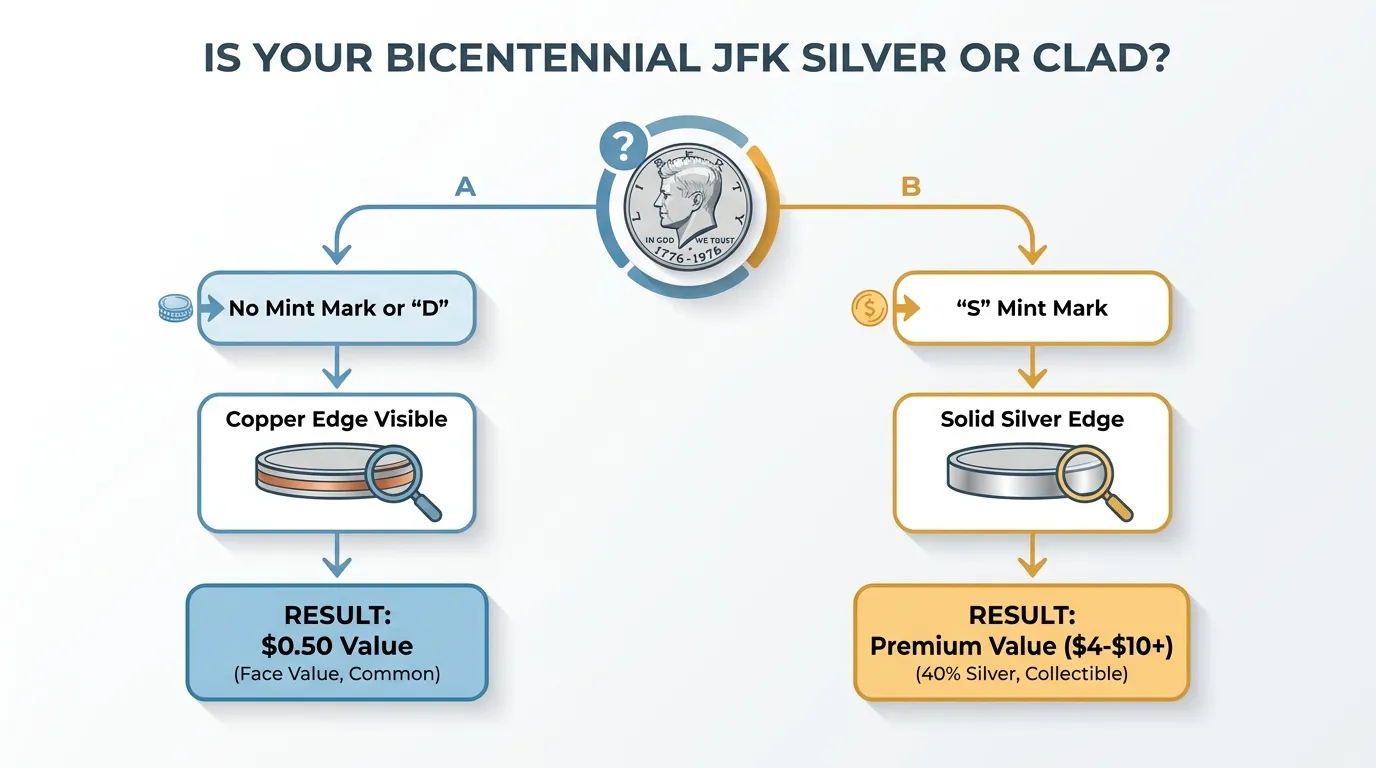 AI Generated Infographic
The "S" Mint Factor
The San Francisco Mint produced silver-clad versions (40% silver, 60% copper/nickel) specifically for three-coin sets. These are the only Bicentennial halves with intrinsic "melt" value.
- Circulated Clad (P/D Mint): Worth $0.50. High volume makes them non-liquid for collectors.
- 40% Silver Uncirculated (S Mint): Contains 0.1479 troy oz of pure silver.
- Proof Deep Cameo (S Mint): High-gloss finishes that carry premiums based on visual perfection.
| Coin Type | Composition | Mint Mark | Typical Grade | Estimated Value |
|---|---|---|---|---|
| Circulated Clad | Cupro-Nickel | P or D | F-AU | $0.50 |
| Silver Uncirculated | 40% Silver | S | MS63 | $4.50 - $6.00 |
| Silver Proof | 40% Silver | S | PR68 | $8.00 - $12.00 |
| Clad Proof | Cupro-Nickel | S | PR69 | $2.00 - $4.00 |
(Source: PCGS Price Guide & NGC Coin Explorer, Sept 2024)
The Professional Edge: Look at the coin's edge. A solid silver stripe indicates 40% silver content; a visible copper/orange line confirms a standard clad coin worth only face value.
{
  "type": "bar",
  "title": "Bicentennial JFK Value: Silver Melt vs. Face Value",
  "index": "Type",
  "categories": ["Market Value (USD)"],
  "data": [
    {"Type": "P/D Clad (Circulated)", "Market Value (USD)": 0.50},
    {"Type": "S-Mint Clad Proof", "Market Value (USD)": 3.00},
    {"Type": "S-Mint Silver Melt", "Market Value (USD)": 4.45},
    {"Type": "S-Mint Silver MS65", "Market Value (USD)": 15.00}
  ],
  "source": "Source: Kitco Silver Spot ($30.12) & Professional Coin Grading Service (Sept 2024)",
  "note": "Silver melt value fluctuates daily with spot price."
}
Rare Errors to Watch For
If your coin is not silver, the only path to significant value is a mint error. The most notable is the 1776-1976-D Doubled Die Obverse (DDO), where doubling is visible in the lettering of "LIBERTY" and the "1776" date. High-grade MS66 examples of this error have fetched over $500 at auction (Source: Heritage Auctions).
How Grading Impacts Your JFK Coins Worth
The distinction between a "raw" coin and a slabbed (graded) coin is the difference between an unverified claim and a certified asset. While a raw coin’s value is subjective—often leading to "grade inflation" by sellers—a grade from PCGS or NGC provides a standardized guarantee of authenticity and condition that institutional buyers demand.
For Kennedy Half Dollars, the financial impact of grading is non-linear. In lower grades, grading is an economic net loss. In "Gem" conditions (MS65 and above), it is the primary driver of ROI.
The Value Gap: Raw vs. Certified
A 1964 Kennedy Half Dollar in an average "Uncirculated" state might trade for its silver melt value plus a small premium. However, the same coin certified as MS67 can command a 500% premium over its raw counterpart due to its registry-set quality.
| Coin State | Grade (Scale 1-70) | Estimated Market Value (1964-P) | Valuation Driver |
|---|---|---|---|
| Raw | Uncirculated (Est. MS60-63) | $12 - $15 | Silver Content + Nominal Premium |
| Slabbed | PCGS/NGC MS65 | $30 - $40 | Numismatic Quality |
| Slabbed | PCGS/NGC MS67 | $150 - $225 | Condition Rarity |
| Slabbed | PCGS/NGC MS68 | $3,500+ | Ultra-Rarity / Registry Set Demand |
(Source: PCGS Price Guide & Greysheet, Sept 2024)
The "So What?": When Grading Makes Financial Sense
Grading fees—including shipping, insurance, and per-coin costs—typically average $35 to $60 per coin. If the projected value of your coin after grading does not exceed the raw value plus these fees, the exercise is a wealth-destroying event.
The Professional Rule of Thumb: Only submit JFK coins for grading if they are 1964–1970 dates in apparent MS65+ condition, or modern NIFC (Not Intended for Circulation) issues that appear flawless (MS68+).
- Authentication: Grading eliminates the risk of "added mint marks" or cleaned surfaces, which can devalue a coin by 50-90%.
- Liquidity: Certified coins sell up to 3x faster on platforms like eBay or Heritage Auctions because the buyer trusts the third-party assessment.
- Protection: Sonically sealed plastic "slabs" prevent environmental toning and physical wear, preserving the coin’s terminal value.
{
  "type": "bar",
  "title": "Cost of Grading vs. Value Increase (1964-P JFK)",
  "index": "Grade",
  "categories": ["Net Profit/Loss after Fees"],
  "data": [
    {"Grade": "Raw", "Net Profit/Loss after Fees": 0},
    {"Grade": "MS63", "Net Profit/Loss after Fees": -25},
    {"Grade": "MS65", "Net Profit/Loss after Fees": 10},
    {"Grade": "MS67", "Net Profit/Loss after Fees": 160}
  ],
  "source": "Source: Analysis based on PCGS Fee Schedule & Median Auction Realized Prices (Sept 2024)",
  "note": "Assumes $40 total grading/shipping cost. MS63 results in a loss due to fees exceeding value gain."
}
Where to Sell and Realize Your JFK Coins Worth
Realizing the full value of a JFK half dollar requires matching the coin’s specific grade to the right liquidity channel. Selling a 1964 silver melt coin on eBay is a strategic error due to shipping overhead, while selling an MS67 rarity to a local shop often results in a "wholesale" lowball offer.
The Liquidity Matrix: Where to Sell
Your exit strategy must be dictated by the asset type. For bulk silver (1964 and 1965–1970 40% halves), prioritize National Bullion Dealers. For mid-tier graded coins, utilize Online Marketplaces. For six-figure rarities, Major Auction Houses are the only viable path to a record price.
| Platform | Best For | Typical Payout | Speed | Fees/Friction |
|---|---|---|---|---|
| Bullion Dealer | 90% & 40% Silver Bags | 92% - 98% of Spot | 1-3 Days | Shipping/Insurance |
| Local Coin Shop | Low-value Raw Coins | 70% - 80% of Retail | Instant | 0% (Direct Sale) |
| eBay | MS63-MS65 Graded | 100% of Market | 7-14 Days | ~13.25% + $0.30 |
| Elite Auctions | MS67+, Rare Varieties | Record Prices | 3-6 Months | 15-20% Seller Fee |
(Source: Professional Coin Dealers Association (PCDA) & eBay Fee Schedules, Sept 2024)
Strategic Insights for Maximizing Margin
- Avoid the "Pawn Shop Trap": Generalist pawn shops typically offer 50% of the silver melt value. Professional numismatists or bullion-specific dealers like APMEX or JM Bullion use live spot prices, ensuring you capture the 90%+ intrinsic value (Source: World Gold Council/Bullion Market Standards).
- The eBay "Shipping Squeeze": Selling a single 1964 JFK (approx. $10-12 silver value) on eBay is unprofitable. After a $5 shipping fee and 13% commission, your net take-home drops by nearly 60%. Consolidate into "rolls" or "lots" to dilute shipping costs.
- Consignment for Rarities: For coins valued over $2,000, skip direct sales. Consigning to houses like Heritage Auctions or Stack’s Bowers puts your coin in front of high-net-worth collectors, often resulting in a hammer price that offsets the 15% commission.
{
  "type": "bar",
  "title": "Net Payout Percentage by Sales Channel",
  "index": "Channel",
  "categories": ["Net Payout %"],
  "data": [
    {"Channel": "Bullion Dealer (Bulk)", "Net Payout %": 95},
    {"Channel": "Local Shop (Raw)", "Net Payout %": 75},
    {"Channel": "eBay (Single Item)", "Net Payout %": 82},
    {"Channel": "Auction (Rarity)", "Net Payout %": 85}
  ],
  "source": "Source: Market Analysis of Realized Sales (Sept 2024)",
  "note": "eBay payout includes 13.25% fee + estimated shipping. Auction payout is net of 15% seller premium."
}
Maximizing your JFK coin's worth is a matter of operational efficiency. By selecting the channel that minimizes friction and fees for your specific tier of coin, you ensure that the "Reality Check" valuation remains in your pocket rather than the dealer's margin. For collectors seeking to optimize their broader portfolio with the same data-driven rigor, a systematic approach to Tritonix.ai can provide the institutional-grade research workflow needed to stay ahead of shifting market fundamentals.
FAQ
How much is a 1964 JFK coin worth today?
A 1964 Kennedy half dollar is worth approximately $23.15 based solely on its 90% silver content when the silver spot price is $64/oz. High-grade specimens can be worth significantly more.
Are 1776-1976 Bicentennial JFK coins worth money?
Most circulated Bicentennial halves are worth only face value ($0.50). However, the 40% silver 'S' mint versions can be worth between $4.50 and $15 depending on the grade.
What is the 'No FG' error and how does it affect value?
The 'No FG' error occurs when the engraver's initials are missing from the reverse. A 1972-D 'No FG' in MS-65 grade can be worth over $650, compared to just $12 for a standard version.
Which JFK coins contain silver?
JFK coins from 1964 are 90% silver. Coins minted between 1965 and 1970 are 40% silver. Most coins from 1971 onwards are copper-nickel clad with no silver content.
Is a 1970-D Kennedy half dollar rare?
Yes, the 1970-D is considered a key date because it was only issued in Mint Sets and never for circulation. High-grade MS67 examples can trade for $3,000 to $6,000.